Your sofa is likely the most used piece of furniture in your home. It is your undisputed anchor—the place where you unwind after a long day, where guests gather for conversation, where families bond over movie nights, and where the best Sunday naps happen. It is more than just a seat; it is an investment in your lifestyle.
However, buying a sofa is one of the most challenging design decisions you will ever make. The physics of it are daunting: a sofa that looks petite in a 10,000-square-foot showroom might completely overwhelm your 400-square-foot apartment. Conversely, a sofa that feels "cozy" on a website might feel lost in a cavernous open-plan living room. Beyond aesthetics, you have to consider frame construction, suspension systems, and fabric durability. This guide is designed to de-mystify the process and help you find a piece that you will love for a decade or more.
Table of Contents
1. The Mathematics of Scale: Measuring Beyond the Room
Before you even begin looking at velvet vs. leather, you need to understand the physical constraints of your home. Most people measure the length of their wall and call it a day. But the "scale" of a sofa involves depth, height, and the relationship to surrounding furniture.
Consider the "Walkability Factor." A good rule of thumb is to leave at least 18 inches between the edge of your sofa and your coffee table. Any less, and you'll be bumping your shins; any more, and you won't be able to reach your tea. You should also maintain at least 30 inches for major traffic paths. If you have to shuffle sideways to get past your sofa, it's too big for the room.

Crucially, you must measure your **doorways, hallways, and elevators**. There is nothing more heartbreaking than buying your dream sofa only to find that it won't clear the 90-degree turn in your staircase. Check the "Boxed Dimensions" if it ships in pieces, but for solid-frame sofas, you need to ensure the diagonal depth is less than your narrowest door width.
"A sofa should breathe in the space, not choke it. When in doubt, scale down and use armchairs to fill the gap. Negative space is your friend in interior design."
2. Shapes and Configurations: What Fits Your Life?
The "Shape" of your sofa should reflect your lifestyle more than your Pinterest board. Are you a "lounger" or a "sitter"?
L-Shaped Sectionals
Sectionals are the kings of the open-plan home. They define the living zone without needing walls, creating a "room within a room." They are perfect for large families or people who host movie marathons. However, they are visually heavy and hard to reposition. If you move homes frequently, a sectional might not fit your next layout.
Standard Linear Sofas (Three-Seaters)
The classic linear sofa is the most flexible choice. It allows for symmetrical layouts (two sofas facing each other) which are better for conversation. It also makes moving much easier. If you want a more formal look, go for a "Tuxedo" or "Chesterfield" style where the back and arms are the same height.


Tape the floor. Use painters tape to outline the sofa's footprint on your floor to see how it truly feels in the space.
3. The Fabric Debate: Durability vs. Aesthetics
Choosing a fabric is essentially choosing how much you want to worry about your furniture. If you have kids or shedding pets, stay away from silk and high-pile velvet unless you're prepared for a lot of maintenance.
Performance Fabrics: These are the current gold standard. Often made from treated polyester or acrylic (like Sunbrella), they resist stains and can be cleaned with mild soap and water. They have a softer hand-feel than ever before, often mimicking linen or cotton.
Leather: Leather is the only material that genuinely looks better after 10 years of use. It develops a rich patina and doesn't trap pet hair or dust. However, it can feel cold in winter and sticky in summer if you don't have good climate control. High-quality aniline leather will scratch (and that's part of its charm), while pigmented leather is more spill-resistant.
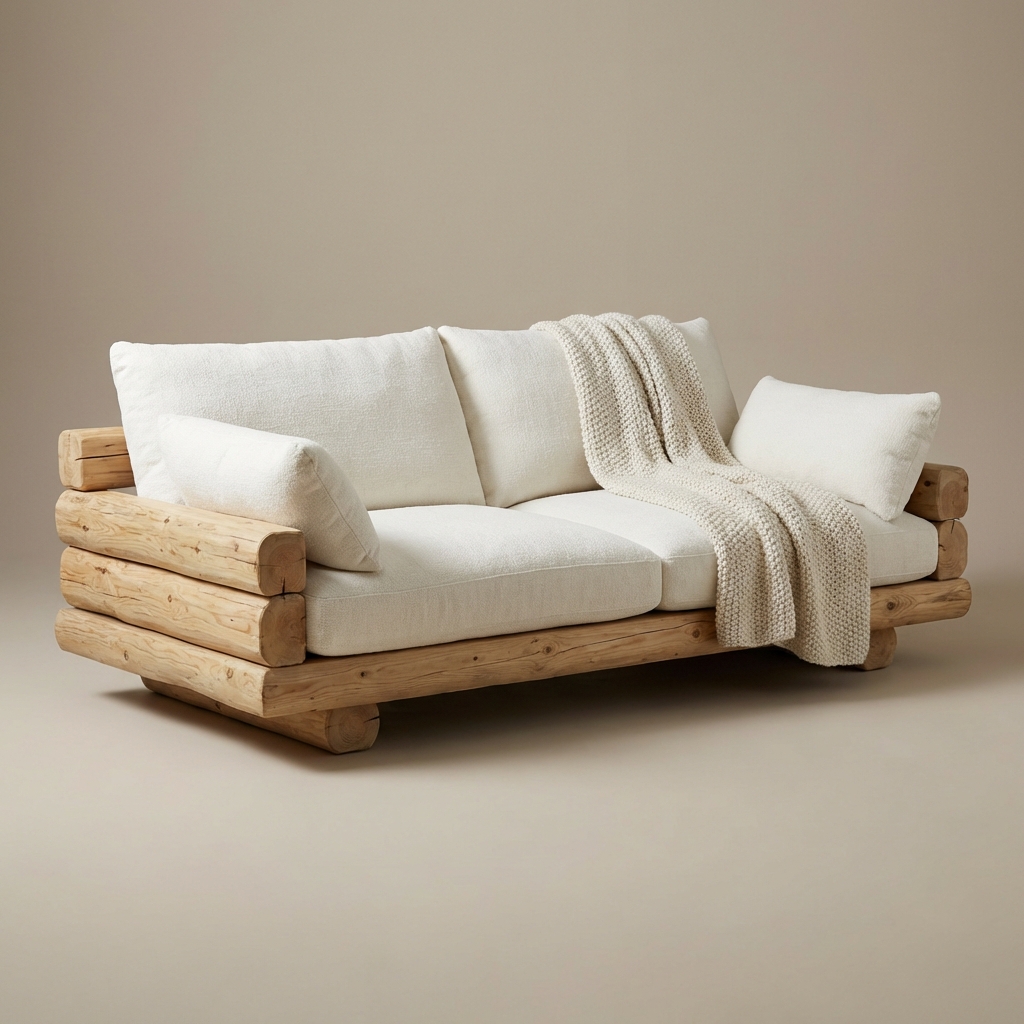
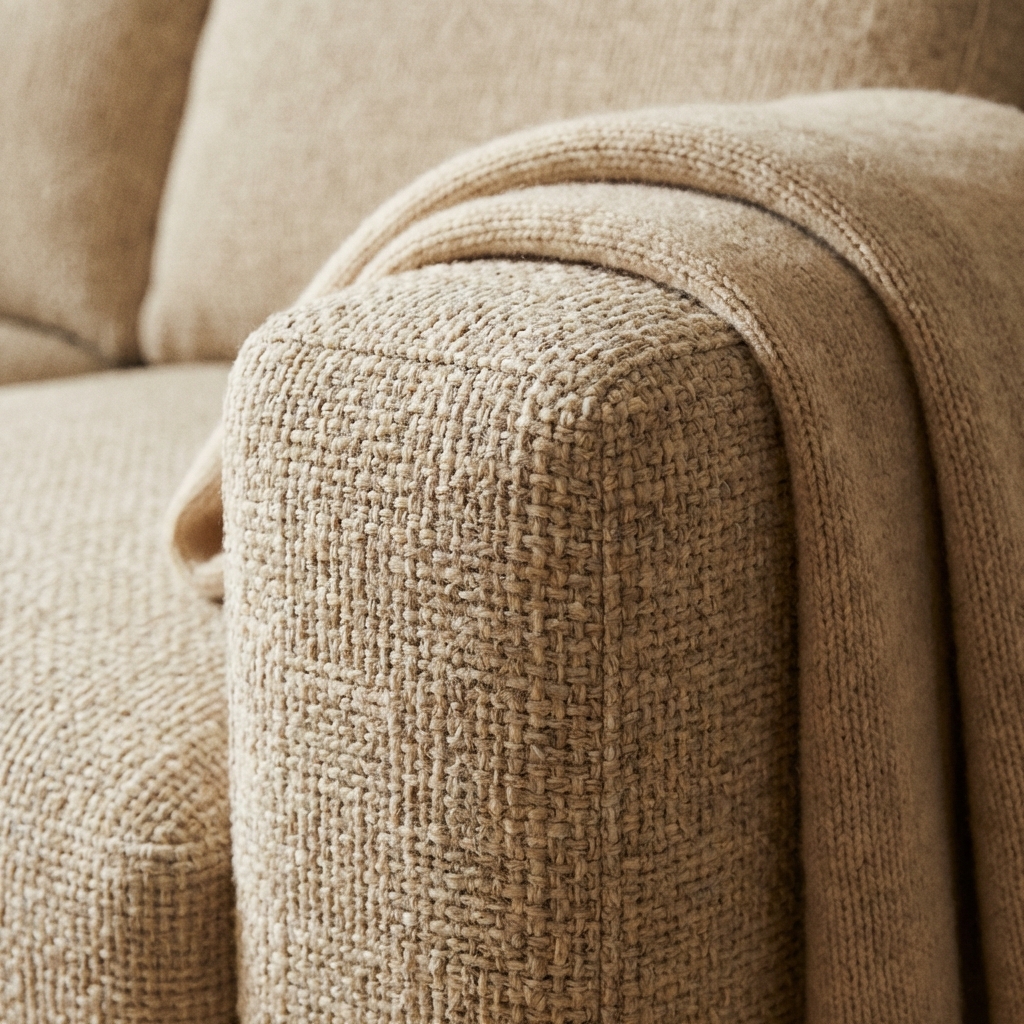
A tight weave is less likely to show "pilling" and is more resistant to pet claws. Performance weaves are perfect for high-traffic homes.
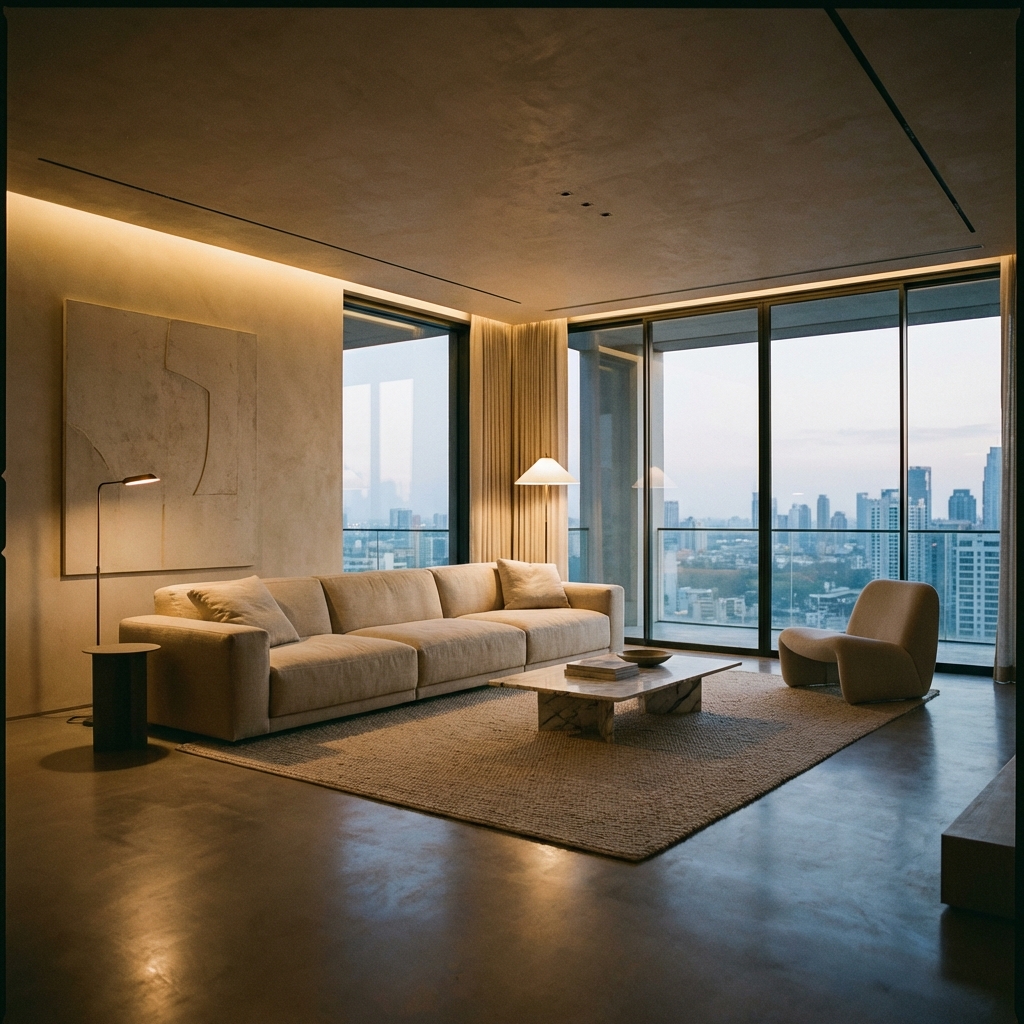
Neutral colors give you the flexibility to change your room's mood with inexpensive cushions and throws as the seasons change.
4. What’s Inside Matters: The Anatomy of Comfort
A sofa can look beautiful but feel like a park bench after six months. This is usually due to poor internal construction. When shopping, ask about two things: the **Frame** and the **Suspension**.
The frame should ideally be kiln-dried hardwood (like oak or ash). Kiln-drying removes moisture from the wood, preventing it from warping or cracking over time. Avoid "particle board" or "MDF" frames, which will likely fail at the joints within 3 years. For suspension, "8-way hand-tied springs" are the gold standard for durability and comfort—they move with you. "Sinuous springs" (S-shaped wires) are a good mid-range option. If the sales rep says "high-density webbing," it might feel soft initially, but it will sag much faster than metal springs.
Finally, consider the filling. High-density foam wrapped in down/feather is the ultimate luxury, providing a "sit-in" rather than "sit-on" feel. However, it requires fluffing. If you hate fluffing, stick with a high-resiliency foam core.

Frequently Asked Questions
Conclusion: Take Your Time
A sofa is often the most expensive single item of furniture in a home. Don't rush the decision based on a sale or a trend. Sit on it, lie on it, and ask the tough questions about what's underneath the fabric. When you find the right one, it won't just be a piece of furniture—it will be the heart of your home for a decade to come.
 Home Sweet
Home
Home Sweet
Home

Sarah Jenkins
Senior Interior Designer & Upholstery Consultant
Join our Inner Circle
Get first access to new collections and interior design masterclasses.