
Every piece of wooden furniture tells a story that begins long before it enters your home. That story starts in a forest—perhaps in the deep highlands of Sumatra, the teak forests of Central Java, or the managed oak groves of Europe. But the crucial question for the modern consumer is: *who* is telling that story, and what happens to the forest after the tree is gone?

For decades, the global furniture industry has been built on a foundation of "fast" sourcing. Large-scale logging operations have often prioritized short-term profit over long-term ecological health, resulting in the loss of millions of hectares of primary forest. As we enter a new era of environmental consciousness, "Ethical Sourcing" has transitioned from a niche luxury to a moral imperative. When you choose an ethically sourced piece of furniture, you aren't just buying an object; you are casting a vote for the survival of global biodiversity and the dignity of forest communities.
In this guide, we will explore the complex world of timber sourcing—from the ecological consequences of illegal logging to the specific certifications that ensure your furniture is helping, not hurting, the planet.
Table of Contents
The Dark Side of the Industry: The True Cost of Cheap Wood
Illegal logging is not just a crime of theft; it is a crime against future generations. When forests are harvested illegally, regulations regarding replanting, soil protection, and water preservation are ignored. This leads to massive soil erosion, which causes landslides and floods that can wipe out entire local villages.
Furthermore, illegal logging is a primary driver of habitat loss for some of the world's most endangered species, including orangutans, tigers, and jaguars. From a climate perspective, tropical forests are the world's most efficient "carbon sinks." When they are destroyed, huge amounts of stored carbon are released into the atmosphere, directly accelerating global warming. The "lower price tag" on a cheap piece of furniture is subsidised by these massive environmental and social costs. In short: if the price seems too good to be true, it's because someone (or something) else is paying the difference.


"Sustainability is no longer about doing less harm. It's about doing more good. The furniture we buy today should be a contribution to the planet, not a subtraction from it."
Decoding Certifications: What to Look For
Understanding where wood comes from can be confusing. Fortunately, several international and national organizations have developed rigorous tracking systems to ensure transparency. When you are shopping for furniture, you should look for specific labels that guarantee the timber was harvested legally and sustainably.
- FSC (Forest Stewardship Council): The global gold standard. FSC-certified wood is tracked from the forest to the final product. It ensures that wood is harvested without damaging the forest’s biodiversity or the rights of workers.
- PEFC (Programme for the Endorsement of Forest Certification): An international non-profit that works to promote sustainable forest management through independent third-party certification.
- SVLK (Sistem Verifikasi Legalitas Kayu): Specific to Indonesia, this is a mandatory national certification system that ensures all timber products harvested in Indonesia come from legal sources and are fully traceable.
At Aunara, we prioritize SVLK and FSC-certified timber for all our solid wood collections. We believe that transparency is the ultimate luxury in a world of clouded supply chains.


A healthy forest is a diverse ecosystem, not a row of timber. Real sustainability allows the forest to regenerate naturally.
The Human Factor: Supporting Local Craftsmanship
Ethical sourcing isn't just about trees; it's about people. In many regions of the world, furniture making is a traditional craft that has supported communities for hundreds of years. However, industrialization and mass-market demands have pushed many local artisans out of the market in favor of automated factories that produce generic designs.
When you choose a company that sources ethically, you are often supporting a supply chain that pays fair wages to local craftsmen. These artisans bring a level of care and detail to their work that machines simply cannot replicate. By maintaining these traditional skills, we ensure that cultural heritage is preserved. Every hand-sanded surface and hand-carved joint is a testament to a human life lived with purpose. Ethical sourcing ensures that these workers are protected from exploitation and that their land rights are respected.
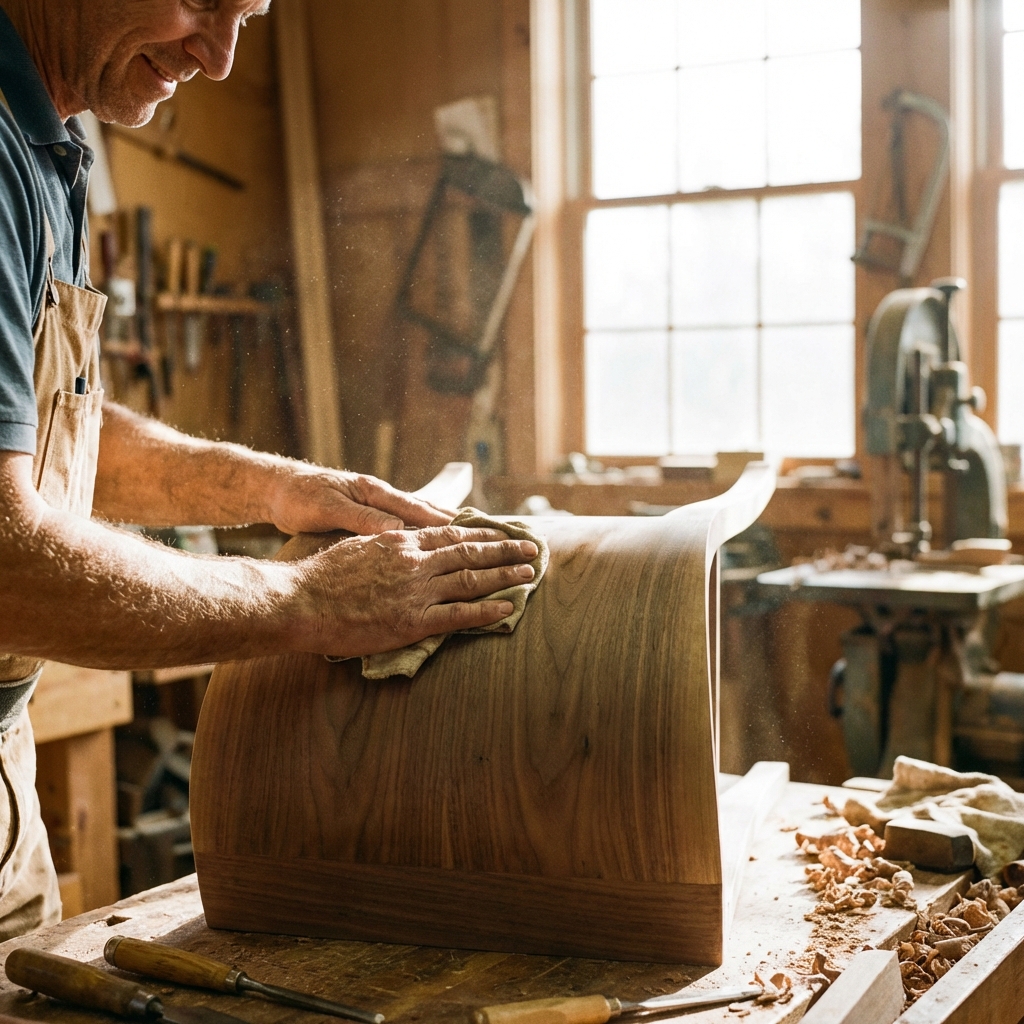
Skilled artisans bring soul to the wood. Their expertise in understanding grain and moisture content is what makes a piece of furniture last for generations.
"When you buy cheap, mass-produced furniture, someone else is paying the price. Usually, it's the environment or the workers at the bottom of the supply chain. Ethical sourcing is about ensuring that everyone—from the forest ranger to the delivery driver—is treated with respect."
Reclaimed Wood: The Ultimate Sustainability
Perhaps the most ethical wood of all is the wood that has already been used. Reclaimed wood—sourced from old barns, ships, or demolished buildings—gives a second life to timber that would otherwise be burned or thrown away.
There are two major benefits to reclaimed wood. First, it requires zero new logging, making its carbon footprint incredibly low. Second, because most reclaimed wood comes from "old-growth" timber (trees that grew slowly over hundreds of years), it is significantly denser and more durable than new-growth wood. It possesses a depth of color and a physical strength that is impossible to find in modern timber. Furthermore, every nail hole and weathering mark on a piece of reclaimed furniture is a "scar of honor," giving the piece a unique aesthetic that can never be duplicated.
Frequently Asked Questions
Conclusion: Investing in a Greener Future
Every purchase you make is a signal to the market. By choosing ethically sourced and sustainably produced wooden furniture, you are telling the industry that the planet matters more than price. You are choosing to surround yourself with objects of integrity—objects that have a soul, a history, and a future.
As you look for your next piece of furniture, remember that wood is a gift from the earth. When we treat that gift with respect, by choosing sources that allow the forest to thrive, we aren't just decorating our homes; we are protecting our shared home. The beauty of a solid wood table is enhanced tenfold when you know that for every tree used to make it, another was planted to take its place.
 Respect the
Origin
Respect the
Origin

Sarah Jenkins
Sustainability Advocate & Interior Designer
Sarah has spent the last decade traveling through Indonesia and Southeast Asia, working directly with local timber cooperatives to reform supply chain transparency.
Join our Inner Circle
Get first access to new collections and interior design masterclasses.